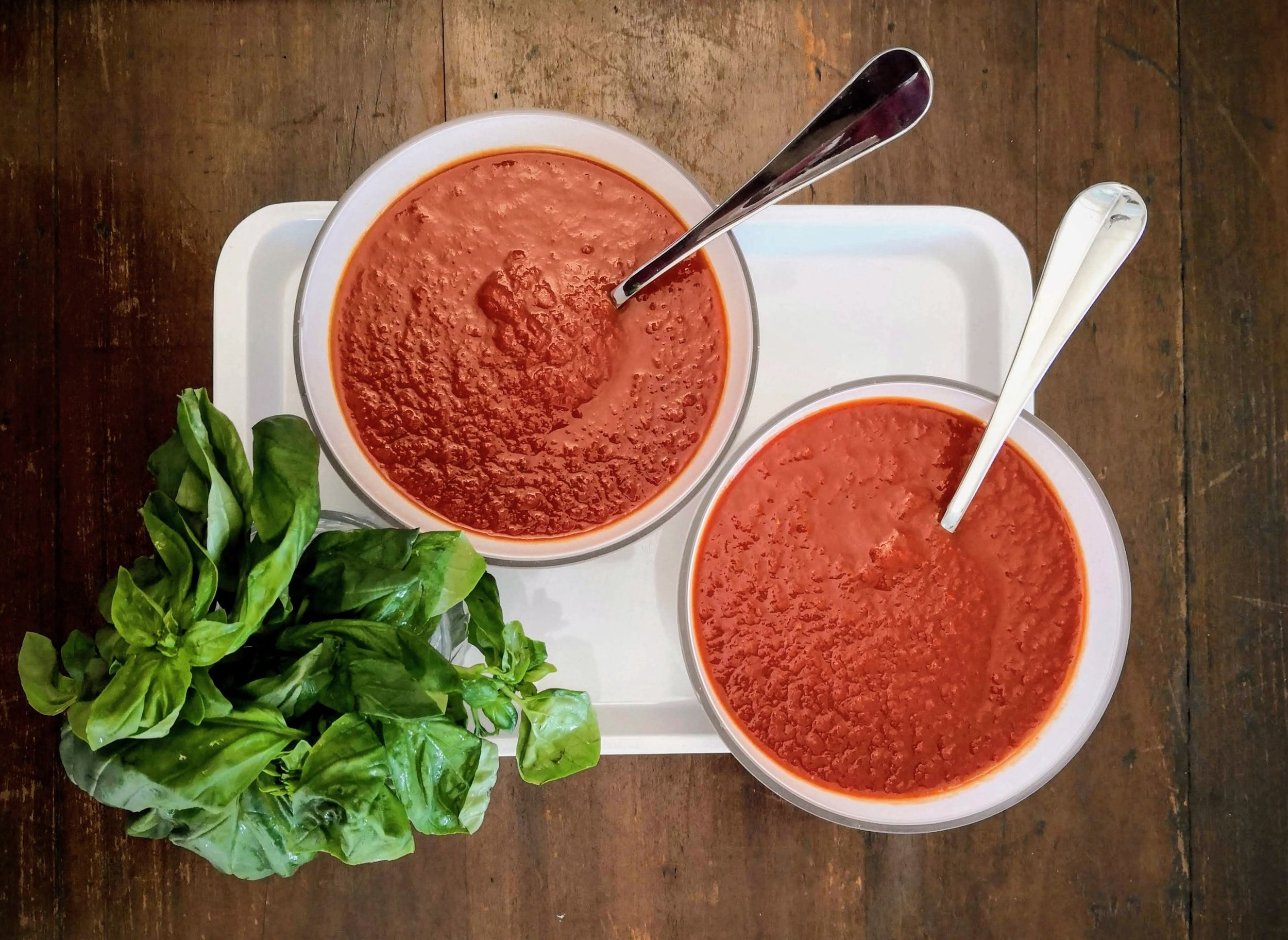
Trapanese Pesto (for pasta or bruschetta)
Serves 6
• 240 g (8,5 oz) plum (or cherry) tomatoes
• 120 g (4 oz) toasted almonds
• 2-3 garlic peeled cloves
• 10 leaves of basil
• extra virgin olive oil
• salt to taste
With a mortar and pestle mash the garlic with salt until it gets creamy, then add the almonds, oil, basil and crush them; chop the tomatoes into tiny pieces and place them into a bowl, season with salt and extra virgin olive oil. Finally, pour the almonds mixture into the bowl with the tomatoes and mix all together. Add more oil if necessary. Let the pesto rests for at least 1 hour to blend all the flavors.
If you don’t have a mortar, you can use an immersion blender or a food processor. Place the tomatoes cut in big pieces and the basil in the food processor or into a jar (most of the immersion blenders have their own pastic jar/glass) and pulse. Make sure you do not blend for too long (we do not want a smoothie!); if you are making a good amount of pesto, blend the tomatoes and basil a little at a time and place the mixture into a bowl. Then add the rest of the ingredients into the bowl: ground almonds, the garlic paste made as written above (if you do not have a mortar and pestle use a garlic press), extra virgin olive oil and salt (if necessary).
This pesto is perfect for a pasta but also on a toasted slice of bread. In Italy, the most popular pesto is usually made with basil and it is typical of the Genova area (north west Italy), but the generic word pesto refers to any kind of sauce made with raw ingredients crushed and blended in a mortar with pestle. In Sicily we create pestos with our local ingredients like almond or pistachio.